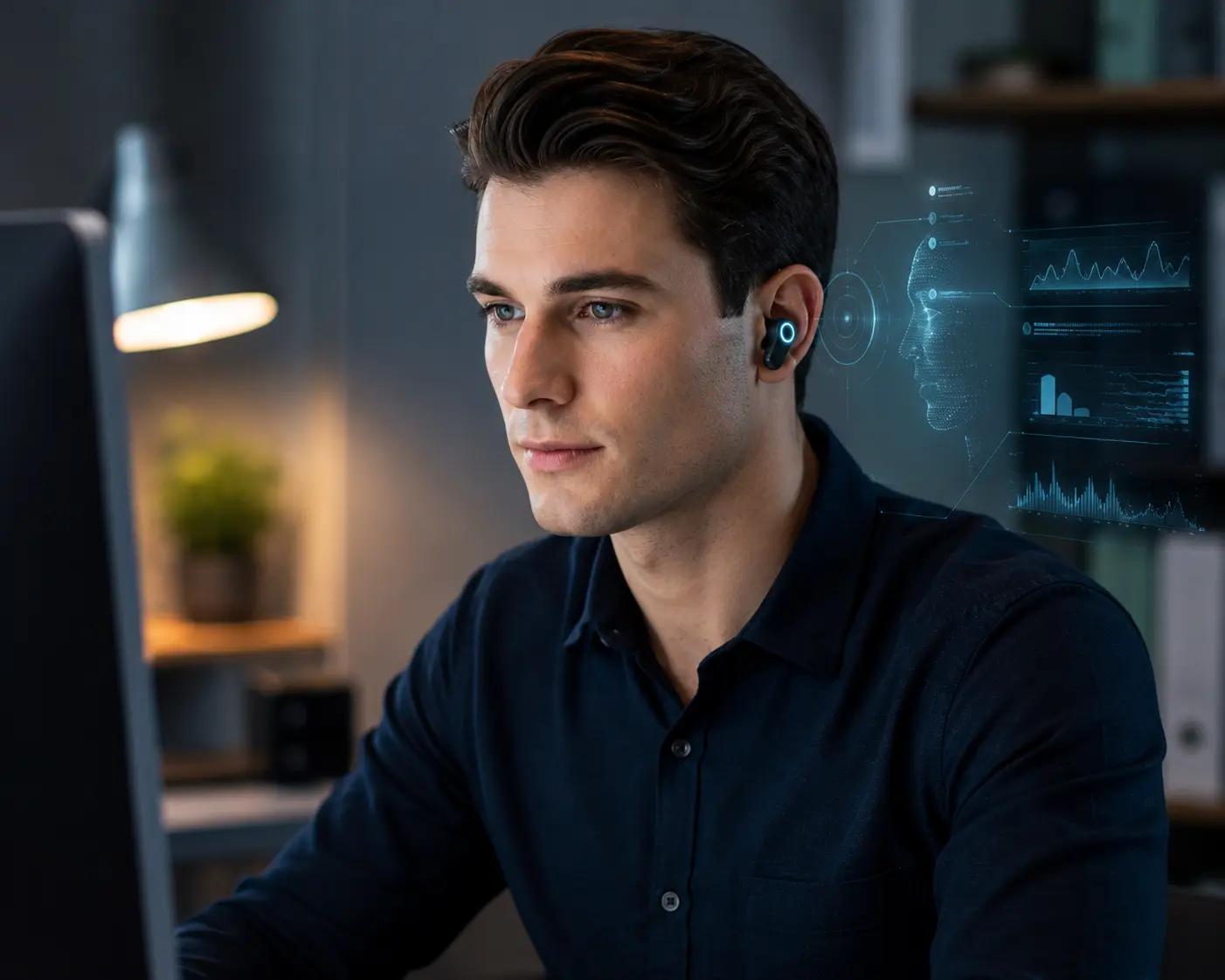
Imagine your earbuds could sense when you are focused, stressed, or completely drained, sometimes before you notice it yourself. That is not a concept being tested in a university lab anymore. In 2026, it is something you can actually buy, wear, and use on a Tuesday morning commute.
Here is the uncomfortable part though. Some of these neural earbuds genuinely deliver on that promise. Others are just overpriced audio gear dressed up with biosensor language and a slick app. The difference between the two is not obvious from a product page. This guide will help you figure out which is which before you spend several hundred dollars finding out the hard way.
Neural earbuds refer to in-ear wearables that combine traditional audio hardware with biosensors capable of measuring brain activity, stress responses, heart rate variability, and other physiological signals in real time, without any wires, headsets, or sticky electrodes.
The ear canal turns out to be one of the best places on the human body to collect biometric data. It is stable, close to key brain regions, and already part of most people's daily routine. That combination changed what was possible.
Why This Category Is Worth Paying Attention To Right Now
What made neural earbuds possible was not a sudden breakthrough in neuroscience. It was miniaturization. Sensors that once required bulky laboratory equipment now fit inside something that weighs a few grams and sits comfortably in your ear.
A couple of years ago, the experience of using neural earbuds felt like a novelty. You would get a focus score, glance at a stress chart, find it mildly interesting, and then forget the feature existed. That has changed with the latest generation of products.
The better pairs now actually do something with the data they collect rather than just displaying it. They reduce distractions during deep focus sessions. They adjust audio settings when they detect mental fatigue. They quiet notifications when your brain signals suggest you are not in a state to deal with interruptions. None of that is dramatic on any given day. Over weeks, it adds up to something genuinely useful.
The market is responding accordingly. Neural wearables are growing quickly as a category, and earbuds are leading that shift precisely because they do not ask you to change anything about your existing habits. You already wear earbuds. These just upgrade what those earbuds do while you are wearing them.
What Neural Earbuds Actually Measure
This is where most buyers get confused, and where most marketing gets deliberately vague. Not everything sold with a neural label is actually reading your brain. The distinction matters a lot when you are trying to evaluate whether a product is worth buying.
Real Neural Data via EEG
EEG stands for electroencephalography. It measures the electrical activity produced by your brain. In earbuds, small electrodes built into the eartips pick up signals from the temporal region of your skull. This is what makes features like focus tracking, fatigue detection, sleep stage estimation, and stress pattern monitoring actually possible. Without EEG, a product is not truly reading brain activity, regardless of how it is marketed.
Supporting Biosignals
Most neural earbuds pair EEG with a collection of other sensors that provide additional context:
Heart rate and heart rate variability, which correlate with stress and recovery states
Blood oxygen levels for sleep and exertion monitoring
Skin conductance response, which reflects emotional arousal and stress
Accelerometer data for movement and posture tracking
These signals are genuinely useful. They add context and help the device make better inferences. But they are not brain data. If a product only tracks heart rate and still calls itself neural, that is a marketing claim worth questioning before you buy.
The Five Neural Earbuds That Actually Deliver in 2026
These five pairs were evaluated in real conditions across work sessions, commutes, workouts, and sleep. Not just spec sheets, but what it actually feels like to live with them day to day.
1. Neurosity Shift Pro: Best Overall
The Shift Pro is the most complete product in this category right now. It packs more sensors than any other pair tested and, more importantly, it knows what to do with the data it collects. Most neural earbuds show you information. The Shift Pro reacts to it.
When your focus readings are strong, it quietly reduces interruptions. When it detects mental fatigue building, it prompts you to step away for a few minutes. After a few days of use, it starts to feel less like a gadget and more like something that is genuinely helping you manage your energy across the workday.
The privacy approach is also worth highlighting. All data processing happens on the device itself. Nothing is sent to a server. For something collecting brain-related signals, that matters more than most buyers initially think.
Works well: Strong sensor accuracy, thoughtful real-time adjustments, solid on-device privacy
Falls short: Expensive, requires initial calibration, missing a few convenience features competitors have
2. Muse Stream: Best for Meditation and Sleep
The Muse Stream does not try to be everything. It leans hard into the two use cases it does better than anyone else in this price range: sleep tracking and guided meditation. The EEG readings are consistent, the sleep staging is reliable, and the app ecosystem built around those features is clearly designed by people who actually thought about how meditators and sleep-focused users behave.
What you give up is general-purpose audio quality. The sound is average. There is no noise cancellation. If those things matter to you, the Muse Stream will frustrate you. If you bought it specifically for sleep and mindfulness, you will probably be very happy with it.
Works well: Excellent sleep tracking accuracy, reliable EEG performance, strong meditation feature set
Falls short: Average audio quality, no noise cancellation
3. Sony LinkBuds Neural: Best Balance
Sony took a different approach to this category than most competitors. Rather than leading with neural features and treating audio as secondary, they built an exceptional pair of earbuds first and layered neural capabilities on top. The result is the easiest product in this roundup to actually live with every day.
You get genuinely good sound, strong active noise cancellation, and neural features that are capable enough to be useful without ever feeling intrusive or demanding attention. The app is clean and well-designed. The learning curve is close to zero. For someone who wants neural monitoring without changing anything about how they currently use earbuds, this is the most approachable option on the list.
Works well: Excellent audio quality, smooth user experience, well-designed companion app
Falls short: Slightly less sensing accuracy than purpose-built neural devices, some features require a subscription
4. Emotiv EarPods: Built for Developers and Researchers
The Emotiv EarPods are not a consumer product in the traditional sense. They give you raw EEG data rather than polished, interpreted insights. If you are a developer building your own applications, a researcher running experiments, or someone who wants to pipe biometric data into custom workflows, that is genuinely powerful. You can do things with the Emotiv that none of the other products on this list allow.
If you are a regular user who just wants helpful focus or sleep insights, this will feel unfinished and confusing. The audio is weak. The interface assumes technical knowledge. Buy it knowing exactly what it is.
Works well: Full access to raw EEG data, flexible for custom development and research use
Falls short: Poor audio quality, not designed for non-technical users
5. Jabra Evolve Neural: Built for the Workday
The Jabra Evolve Neural knows its audience and does not try to serve anyone else. It is designed for people who spend the majority of their working hours in meetings, on calls, and in focused heads-down work sessions. The standout feature is automatic focus state detection, which can trigger a do-not-disturb mode when your neural signals indicate deep concentration, without you having to manually switch anything.
Call quality is noticeably better than any other product in this roundup, which reflects Jabra's professional audio heritage. Outside of a work context, it loses a lot of its value. And like the Sony, some of the more advanced features require a subscription to access fully.
Works well: Exceptional microphone and call quality, smart work-focused interruption management
Falls short: Limited value outside professional use, full feature set requires subscription
Things That Catch Buyers Off Guard
Fit Affects Accuracy More Than Any Spec
This point comes up in every honest review of neural earbuds and still gets ignored by most buyers. If the eartips do not create consistent contact with your ear canal, the sensor readings become unreliable. Even small shifts caused by talking, chewing, or moving your jaw can degrade the signal quality enough to make the neural features nearly useless. Getting the right tip size and seal is not a minor setup step. It is a core part of whether the product works at all.
Brain Data Deserves More Privacy Scrutiny Than Heart Rate Data
Most people are comfortable with a fitness tracker knowing their heart rate. Neural earbuds collect something fundamentally more personal. Before purchasing any product in this category, look for a clear explanation of where your data is stored, who can access it, and whether it is used to train models or shared with third parties. If that information is not prominently available, treat that as a significant red flag rather than a minor detail to follow up on later.
Battery Life Claims Are Almost Always Optimistic
The figures quoted in marketing materials are typically measured without sensors actively running. In real-world use with neural monitoring enabled, expect meaningfully shorter battery life than advertised. Ask owners in user forums what they actually get per charge before making a decision based on spec sheet numbers.
How to Choose the Right Pair for Your Situation
Define what you actually want from neural monitoring. Focus and work performance, sleep tracking, and meditation are three very different priorities that point toward different products on this list.
Decide how much audio quality matters to you. If you are a serious audio person, the Sony is your option. If neural accuracy is more important than sound, the Neurosity or Muse will serve you better.
Read the privacy policy before you read the spec sheet. This is not optional for a device collecting brain-related data.
Factor in subscription costs. Several products on this list lock meaningful features behind ongoing fees. The true cost of ownership is higher than the purchase price suggests.
Buy from somewhere with a reasonable return window. Fit is deeply personal, and no amount of online research predicts how a specific eartip will feel in your specific ear after three hours of wear.
Verdict
Neural earbuds in 2026 are a real product category delivering real value, but only for buyers who understand what they are actually getting. The technology has moved far enough past novelty that dismissing the whole category would be a mistake. It has not moved far enough that every product with a neural label deserves that description.
The Neurosity Shift Pro is the most complete option for buyers who prioritize accuracy and privacy. The Sony LinkBuds Neural is the easiest daily driver for someone who wants neural features without compromising on audio. The Muse Stream is the clear choice for anyone focused primarily on sleep and meditation. The Jabra Evolve Neural is built for professionals who live in meetings. And the Emotiv EarPods are for developers who want raw data access above everything else.
Pick the one that matches what you actually need, not the one with the most features listed on the box. In a category this new, focus beats breadth every time.
Frequently Asked Questions
Are neural earbuds safe to use every day?
Current consumer neural earbuds use passive EEG sensors that simply detect existing electrical signals rather than emitting anything. The general consensus among researchers is that passive EEG sensing poses no known health risks. That said, long-term studies on daily earbud use at this level of sensor density are still ongoing.
How accurate is EEG sensing in consumer earbuds compared to medical devices?
Consumer earbuds are not medical-grade. They use fewer electrodes and are more susceptible to movement artifacts than clinical EEG equipment. They are accurate enough to reliably detect broad states like focus, fatigue, and relaxation. They are not appropriate for medical diagnosis or clinical monitoring.
Do neural earbuds work for people who have never used biofeedback before?
Yes. The better products on this list are designed for people with no background in neuroscience or biofeedback. The insights are delivered in plain language through simple app interfaces. The learning curve is a matter of days rather than weeks.
What is the difference between neural earbuds and regular fitness earbuds?
Regular fitness earbuds typically measure heart rate, movement, and sometimes blood oxygen. Neural earbuds add EEG sensors that measure brain electrical activity, enabling features like focus tracking, stress detection, and sleep stage monitoring that heart rate data alone cannot support.
Can neural earbuds help with productivity at work?
For knowledge workers who spend long hours in deep focus tasks, yes. The best work-focused pairs can detect when you are in a flow state and automatically suppress distractions, or alert you when fatigue is building before it starts affecting the quality of your work. The Neurosity Shift Pro and Jabra Evolve Neural are the strongest options for this specific use case.
How long does it take for neural earbuds to learn your personal patterns?
Most products require between three and seven days of regular use before their personalisation becomes meaningfully accurate. Some require a short calibration session during initial setup. The more consistent your usage patterns, the faster the device builds a reliable baseline for your specific physiology.