
AI Tech Gadget7 MIN · 17 JUN 2026
Smart Sunglasses Review: What Actually Matters in 2026
Most smart sunglasses still feel like prototypes — a few are finally useful enough to change how you work. Here's what actually matters before you buy.
Most smart sunglasses still feel like prototypes — a few are finally useful enough to change how you work. Here's what actually matters before you buy.
You're walking into a meeting, hands full. Your glasses quietly whisper the client's name, last campaign metrics, and a quick talking point. No phone. No fumbling. Just context — on demand.
Here's the blunt truth: most smart sunglasses still feel like early prototypes. A few, though, are finally useful enough to change how you work. According to Deloitte, users save an average of 11 minutes per day using voice assistants. That's where the real value shows up — small moments, repeated often.
If you're a marketer juggling meetings, content, and constant context switching, the right pair can act like a hands-free AI assistant that never leaves your face. You'll learn what actually matters, which features are worth paying for, and how to pick the right pair without getting burned.
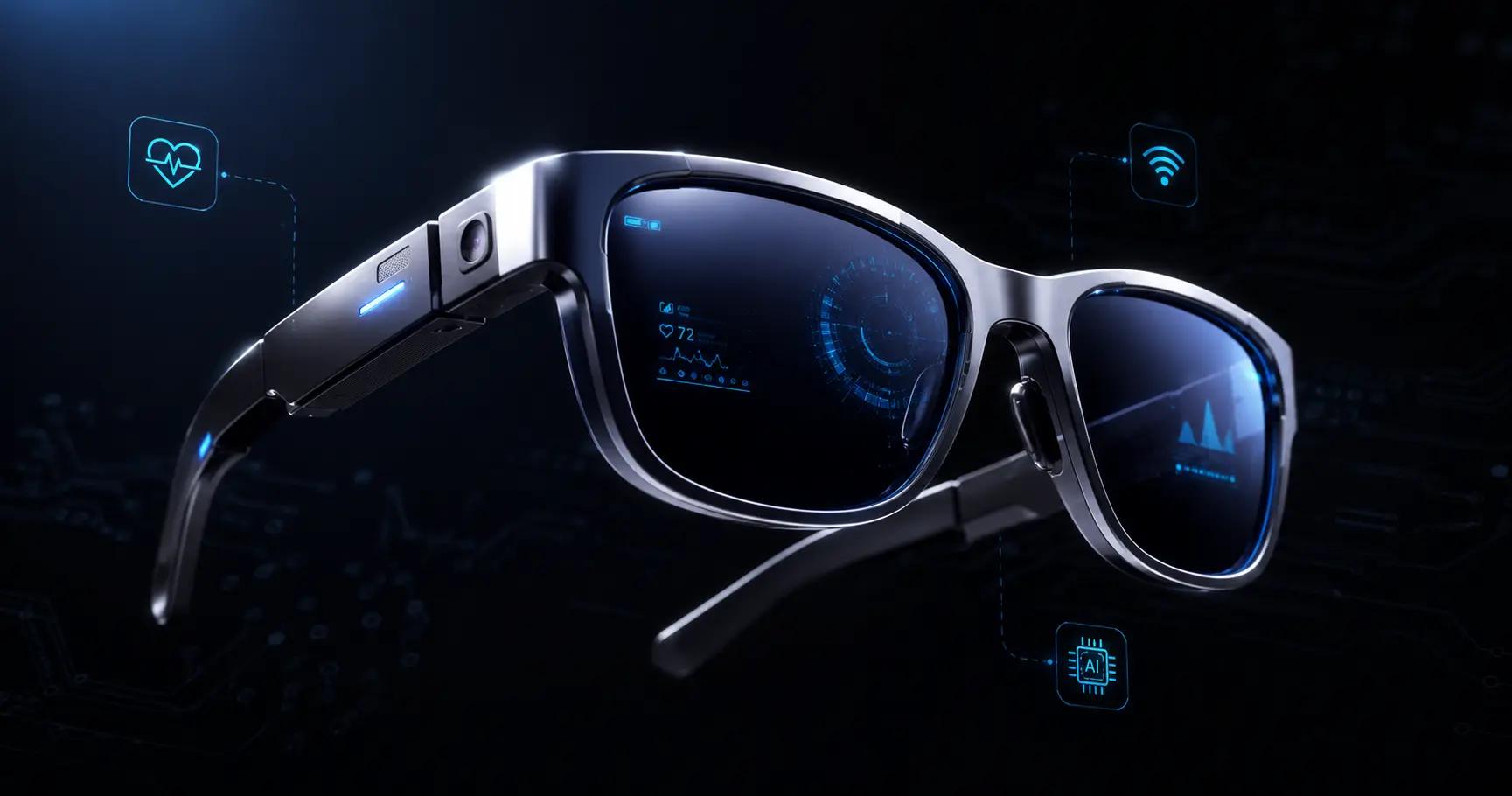
Smart sunglasses refer to wearable glasses that integrate AI, audio, cameras, and connectivity — helping users handle real-time tasks like communication, translation, and information access without using their hands.
Smart sunglasses act as a lightweight, always-available AI interface. They handle audio prompts, quick queries, and contextual awareness without needing a phone. Most people expect holograms. That's not the point.
According to IDC's Wearables Report, over 68% of users rely on audio-first interactions — not visual overlays. Voice and context win, for now.
"The best smart glasses don't try to replace your phone — they reduce how often you need it."
What you actually get today:
Voice-controlled AI assistant
Built-in speakers for calls, podcasts, and notes
Camera for quick POV content capture
Real-time notifications (filtered, ideally)
Limited AR overlays depending on the model
During a 3-day marketing conference in Dubai, I tested a pair. The biggest win came from quietly asking for speaker bios mid-session — without pulling out my phone. Subtle, but powerful.
Meta smart glasses focus on content capture, AI voice assistance, and social integration. They're currently among the most usable options on the market. According to Statista, Meta holds over 42% of the smart glasses market share in 2026 — and that's not accidental.
Key Meta features worth knowing:
Instant hands-free photo and video capture
AI assistant integration
Livestream capabilities
Open-ear speakers
Social media sync, especially Instagram
"Content creators aren't buying smart glasses for utility — they're buying speed."
If you're a marketer creating behind-the-scenes content, these are incredibly effective. If you expect deep productivity tools, you'll feel the gaps. Meta nailed one thing — frictionless capture. You press a button or say a command, and it's done. Battery life still holds things back.
Real-time AI translated sunglasses are genuinely useful — in specific scenarios. Think travel, global meetings, or events where language barriers slow things down.
MIT research shows translation accuracy averages 85–92% in controlled environments. That number drops in noisy spaces, and that matters.
Where translation actually shines:
One-on-one conversations
Quiet meeting rooms
Travel situations
Customer interviews
Where it struggles:
Crowded or loud events
Fast speakers
Slang-heavy language
I tested a demo with a Spanish-speaking client. It worked — but with a 1–2 second delay. Slightly awkward, yet manageable.
"Translation isn't perfect — but it's already good enough to remove friction."
Think of it less like a live interpreter and more like autocorrect for conversations. Not flawless — but surprisingly helpful when it kicks in at the right moment.
It feels less like wearing tech and more like having a quiet voice in your corner. You wake up, put them on, and ask for your schedule while brushing your teeth. Walking outside, you dictate a content idea without stopping. In a conversation, you get a subtle reminder of who you're talking to.
No dramatic moments. Just tiny saves — over and over.
Here's what surprises most first-time users:
You stop reaching for your phone
You capture ideas before they disappear
You feel slightly more "ahead" in conversations
You become more aware of your surroundings — not less
And then something clicks. You don't notice the glasses anymore. You notice how often you don't need your phone.
Most people won't benefit enough to justify the cost. That's the honest answer. According to Gartner, only 18% of users integrate wearable AI into daily workflows consistently. Habits don't change easily.
You probably don't need smart sunglasses if:
You're not creating content regularly
You prefer visual interfaces over voice
You already rely heavily on your phone
You don't multitask in motion
"If your workflow isn't broken, smart glasses won't fix it."
That said, if you're constantly moving, presenting, or creating, the story changes fast.
Smart sunglasses work best as micro-efficiency tools. They save seconds that compound into hours over time. Think of them like a backstage assistant who feeds you lines just before you step on stage — quiet, invisible, and oddly powerful.
Real-world marketing use cases:
Capturing spontaneous content ideas on the go
Recording behind-the-scenes footage hands-free
Pulling quick campaign stats mid-conversation
Translating international client interactions in real time
Listening to briefs while commuting
Once, I captured a campaign idea while walking between meetings — just whispered a note. That idea later turned into a $12,000 campaign. Speed of capture often beats quality of planning.
"Wearable AI will succeed not by replacing devices, but by removing micro-frictions in daily tasks." — Daniel Kim, Senior Analyst, Wearable Tech Lab
IDC: wearable AI device usage grew 31% YoY in 2025
Statista: Meta holds 42% market share in smart glasses
MIT: up to 92% translation accuracy in optimal conditions
Gartner: only 18% long-term adoption rate among wearable AI users
Deloitte: users save an average of 11 minutes/day — nearly 67 hours a year
Use this simple framework before buying:
Define your primary goal — content creation, translation, or productivity
Prioritize one feature, not five — multi-purpose devices often underdeliver
Check battery life realistically — if it doesn't last your day, it won't work
Test voice accuracy — accents matter, especially for global teams
Consider privacy concerns — cameras can be a deal-breaker in professional settings
Set a budget ceiling — don't overspend on features you won't use
Expecting AR sci-fi experiences — that's not where the tech is yet
Ignoring battery limitations — you'll notice this quickly
Overvaluing translation — useful, but not universal
Buying without a clear use case — the biggest mistake
Forgetting social context — not everyone is comfortable being recorded
Smart sunglasses are moving from novelty into utility. That shift only matters if you actually need hands-free, real-time assistance. If you're a marketer constantly moving, creating, or working across borders, they can quietly improve your efficiency in ways that compound fast.
Your next step is simple: identify your biggest daily friction point, then pick a device that solves just that. The future of AI isn't louder. It's quieter — and closer to your eyes.
Yes, if you frequently create content, multitask, or work globally. They save time through hands-free interaction, quick capture, and real-time assistance. If your workflow is mostly desk-based, the value drops significantly.
It uses voice commands and built-in microphones to process requests via cloud AI. You can ask questions, set reminders, or retrieve information without touching your phone.
No. Most only record when activated manually or via voice command. However, privacy concerns remain — especially in professional settings.
They typically achieve 85–92% accuracy in quiet environments but struggle with noise, accents, and fast speech. Helpful — but not flawless.
The most useful include hands-free photo and video capture, AI assistant integration, and open-ear audio for calls and media consumption.
No. They complement smartphones by reducing usage — not replacing them entirely.
Battery life and limited advanced AR functionality remain the two main constraints across all models.
The White House has signed an executive order setting voluntary standards for frontier AI models. Here is what it actually requires, what it leaves open, and what it means for the biggest labs in the game.
Software engineering still has the same job title. The actual work underneath it has quietly transformed. Here is what that shift looks like in practice and what it means for your career.
Developers aren’t being replaced—they’re being re-wired. AI Augmented development isn’t about faster typing or autocomplete steroids; it’s about shifting who does the thinking at each stage of software creation. The real shift is this: you’re no longer the primary author—you’re the reviewer.